Technology glossary

Hidden-connector motherboards

A motherboard design that moves the power and front-panel connectors from the front of the board to its back.

With the connectors on the back of the board, cables run through the case’s rear compartment and fewer are visible on the glass side. ASUS sells this as BTF, MSI as Project Zero and Gigabyte as Project Stealth.

The board needs a case built for this layout, and case makers list the supported board families individually. With ASUS, a BTF-compatible graphics card can also remove the visible power cable.

Devices using this technology

PC cases · 2024

Lian Li O11 Vision Compact

Lian Li's dual-chamber mid tower with uninterrupted glass on the front and side. The top panel swaps between glass and mesh, it supports back-connect motherboards and graphics cards up to 408 mm, and it takes 360 mm radiators in three positions. Owners praise easy assembly and the look; some cable and radiator-tube routes are tight, and one user points to thin panel metal.
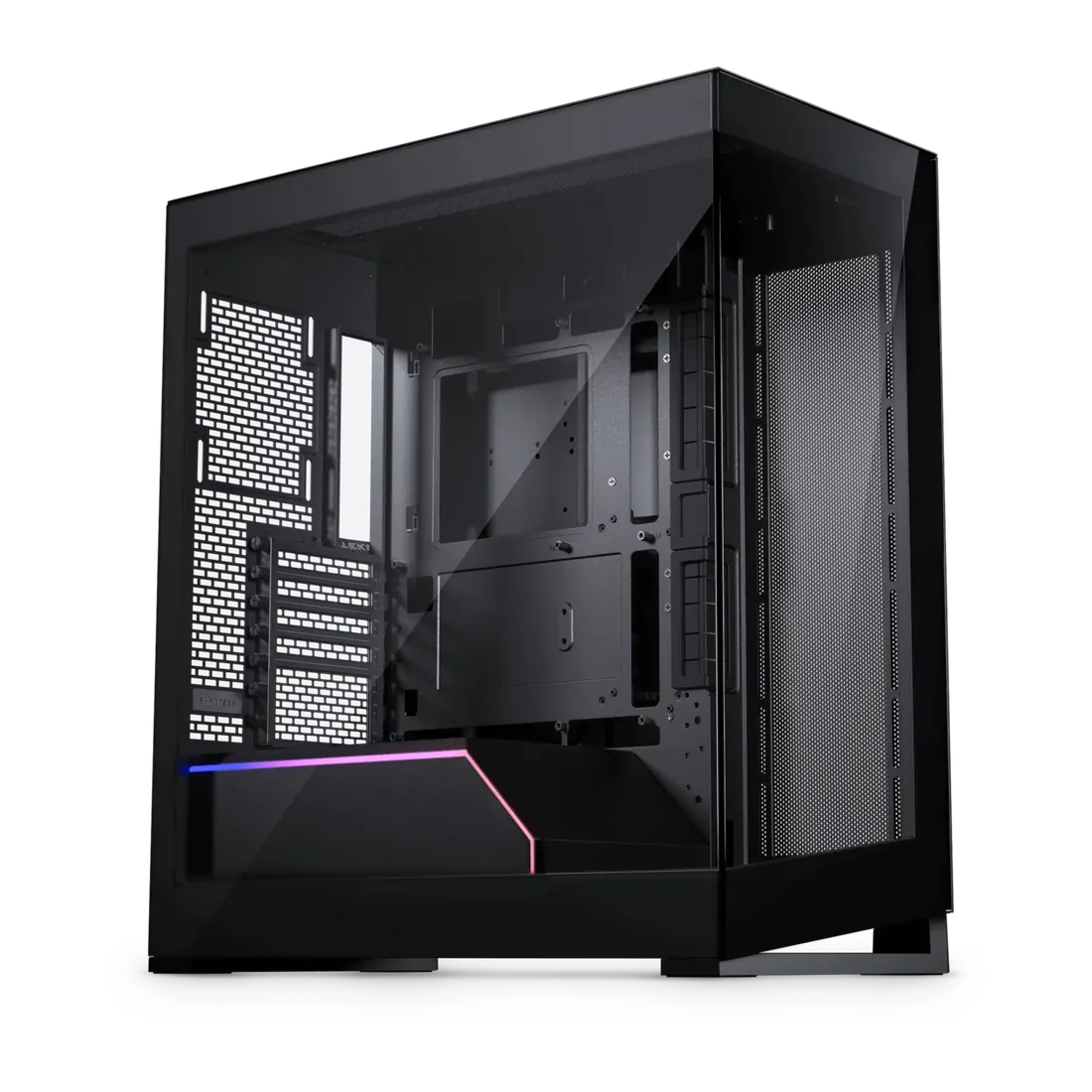
Phanteks NV5 MKII — Manufacturer image of the black NV5 MKII. This record covers the black D-RGB PH-NV523TG_DBK02; no fans are included.

PC cases · 2024

Phanteks NV5 MKII

A mid-tower showcase case with a panoramic glass look. It supports hidden-connector motherboards, takes graphics cards up to 440 mm and has room for 360 mm radiators on the top and side. It ships without fans; all eight 120 mm positions are empty.

Sources

  1. ASUS BTF hidden-connector design
  2. Phanteks NV5 MKII Black: specifications